Saturday, January 11, 2020

Books: "A Higher Loyalty: Truth, Lies, and Leadership"


One thing that is guaranteed to rope me in is a well told human story behind ‘the big picture’. I don’t necessarily need to read about heroes, or villains for that matter, and I don’t have to have larger than life characters to entertain me. No, at the end of the day, just getting into someone’s head so I can understand their take on a situation is enough to hold my attention usually. Not surprisingly this set of interests is magnified when it revolves around an incident or issue I am familiar with.

A Higher Loyalty sets out to not only tell us about one man’s experience in the justice department and the FBI, it makes the case for difficult decisions, and even mistakes made by the author leading up to that time, giving context and a human dimension to the raw facts disgorged by the media over the past year and a half.

From a story-telling standpoint, Comey’s narrative style, word choices, and voice (I was listening to the audio book read by the author) are captivating, well measured, and most importantly, well paced. This is not a book that throws you headlong into the Trump White House, but at the same time the voyage to that point is not a long, plodding, painful trip either. Comey talks about his childhood, with several formative moments highlighted in wonderful detail. We’re also introduced to his time as a father, a husband, a US Attorney, and then his appointment to the directorship of the FBI. Each position, role, and its responsibilities are fleshed out, as well as the context of the role, both to the nation and to Comey himself. But I really have to come back to the narrative style on this; Comey is engaging, articulate, and precise, and when we are clearly at the mercy of his possibly flawed interpretation of a situation, he makes an effort to say as much, but does so smoothly, as part of the overall story. This is not the annotated memo of past event, this is the personal, almost intimate memoirs of man who admits his flaws with enough candor to add, not detract, credibility to his overall message.

Substantively, the story carries a lot of weight in a lot of highly relevant modern subjects. Over the course of his government service, we follow him as he navigates the political terrain around issues such as the US Enhanced Interrogation Policies, warrantless wiretapping and data collection, phone encryption, The Hillary Clinton email investigation, and finally the admitted tumult of his brief term under the Trump administration. Each of these topics is discussed in detail, with a solid argument presented for decisions made, and an almost equal measure of self reflection given on the harder moments. The book is not, and does not pretend to be the final authority on any subject, other than that of James Comey’s perspective, but does vividly and assertively present the author’s perspective for your consideration.

At its core, this book could be viewed in two ways. Perhaps in fifty years, it will be considered an important essay on the merits of leadership, decisions making, and ethics in the sphere of public service. And to be sure, it is absolutely that, and much of its text is penned with the type of timelessness that will make it a credible, and relevant read well into the future.

But, in the immediate sense, this book is also the counter-punch to a man who’s personal reputation was delivered an undisputed body-blow by the conservative body politic of the United States.

Comey explains that he learned of his firing as director of the FBI while on stage at the Los Angeles field office of the FBI, speaking with agents and technical staff. His first inkling of the termination was seeing the news ticker roll across a TV screen at the back of the room while mid-sentence of his remarks to the local agents. A few minutes and a phone call later, he was a newly-made civilian who was not even allowed to stay in the building, and stranded in Los Angeles with no established means to get home. And all of that was long before he even saw the memo notifying him of his termination. This episode, painted with candor, raw emotions, and admitted tears, sets the tone for his penultimate chapter in the book, and lays the groundwork and final context for his senate testimony.

A Higher Loyalty is, in the immediate context, a critical argument against the methods, style, ethics, and mentality of the Trump presidency. He describes Donald Trump’s interactions as “Transnational” (ie. quid-pro-quo), and “Loyalty based”. The overarching sub-theme of the book is an undisguised narrative comparison between Trump and the mafia bosses of the John Gotti era. Early on, he talks about how the bosses of the crime families demanded personal loyalty, and clearly spells out in academic terms how these demands highlight personal and professional failures in their leadership situations, calling them (and not inappropriately) bad leaders for it. As we follow Comey through his career, we not only see his case for these parallels in Donald Trump, we share in his astonishment as he learns about them as well.

While it is hard to say that talking about Trump can be anything other than political, something that the book does well is to establish itself as apolitical. Comey’s arguments and positions throughout the book, which includes his work under George W, Bush, Barack Obama, and finally Donald Trump, are made as strong absolute legal arguments, set aside from any political positions of his own. In fact, one of the critical points of the book is a conversation with then President Obama before he was named Director of the FBI, where he candidly told the newly inaugurated president “I voted for the other guy”. This exchange served as a jumping off point for Comey to explain to us, the audience, how the department of justice, and specifically the FBI must operate at ‘an arm's length’ from the president in order to maintain their independence as law enforcement agencies.

For those critical of Trump, the added perspective will be a welcome addition to your conversation. And for those supportive of Trump, I will argue that if you are hopeful of defending him as a leader, there is no better place to start than words of his own critics so that you can best respond directly to with your own arguments.

In the end, I’m strongly of the opinion that this book is worth reading, no matter your political position.

By: James Comey (Audio book read by the author)
Published: April 17, 2018
ISBN: 978-1-250-19245-5 (Hardcover)

Thursday, January 17, 2019

SW-TLJ: My problem with Holdo


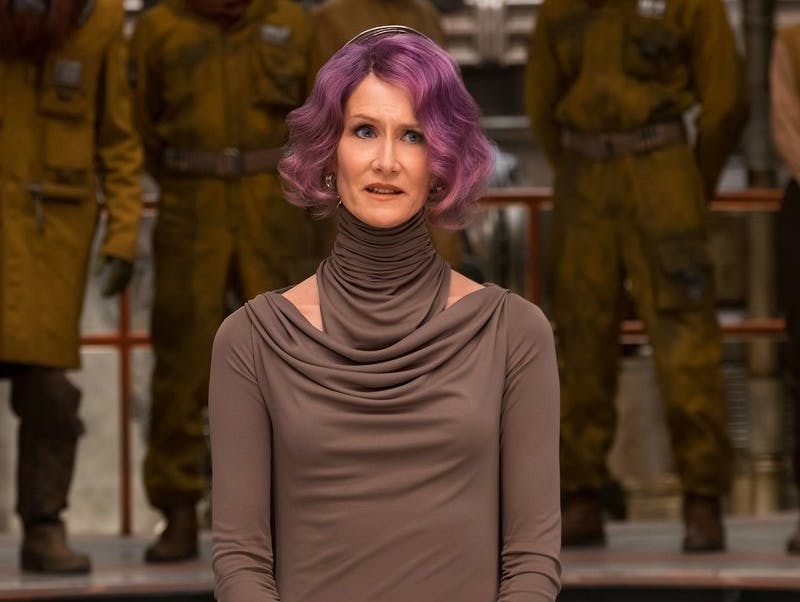
I think I’ve spent a good chunk of the last three or four months trying to wrap my mind around why it is that the character of Vice Admiral Holdo so bothers me. No one element really stands out, and really, individually any of my complaints quickly fall before a basic argument of ‘that’s realistic’, or ‘that was the point of the character’.  Yet, the more I think about it, the more I find myself bothered by her and her actions, and I am left with the opinion that she even brings down the film some measure.

The Numbers

So, lets start with the numbers. If you go to the transcript of the movie and search for “AMILYN HOLDO”, you see 16 hits. In total, this is a character with a total of sixteen lines in a film that is creeping up on three hours. A screen time breakdown at IMDB.com shows she had a total screen time of 5 minutes and 15 seconds. So again, this is supporting character with limited dramatic impact on the story (and to be fair, so was admiral Acbar, but he was seen as a wildly popular figure, so I’m not knocking anyone on the numbers alone).

How do I go about this other than to say “I don’t like her”? I mean, I don’t, but how do I objectively quantify that for the purposes of conversation.

Really, the more I think about it, I think it is the contrast in story telling methods between the original trilogy and the newest installments.

Related image


The conflict was from without, not just from within.

From a stylistic standpoint, this is the first thing that strikes me. In the original trilogy, we don’t have open descent within the ranks. We have talk, we have opinions, we have banter, but not once do we see the major, or even the supporting players in the rebellion coming to blows (verbally or physically) over a situation. At the battle of Yavin, we see very tense rebellion pilots sitting through a very detailed briefing. Sure, its not all roses and candies, (“that’s impossible, even for a computer!”, Wedge Antillies) but its clear they all agree what has to be done. At the battle of Hoth, with an imperial mechanized force baring down on them, we see Leia herself directing the pilots as they make their escape. And at Endore, we see the rebellion command staff shift gears and go on a desperate offensive only a few seconds after realizing they had flow right into the teeth of an imperial trap. When Luke was lost on Hoth, there was no debate about what had to be done when it was time to close the doors, and when the rebel commandos were captured on the ground on endure, Hand and Leia  (who’s whole relationship across two movies was characterized by squabbling) instantly worked together to regain the upper hand.

Also there wasn’t really that much descent on the imperial side. Yes, Vader kept a short leash on his subordinates, but even then we didn’t see open conflict between officers. Probably the closest thing we see to a fight within the ranks is in TESB when the naval staff are arguing as to if the image of the Hoth base is even worth investigating. And lets be fair, that conversation lasted only a few seconds and didn’t really shape the plot much at all.

But what do we have here in TLJ?

First of all, the real indicator that we were in a different age with different people is when Poe and Leia argue over the original dreadnought run. That right there was a whole different dynamic than what we saw three decades ago.

And then, we come back and revisit that sticking point when Poe first meets Vice Admiral Holdo.  She’s dismissive, and condescending to him. That carries over later on when Poe leads an armed mutiny against her. These are the types of things that were never have even been hinted at in the original trilogy, and here we see it as a centerpiece of the action.

Now, speaking strictly objectively, we also see this starting off the last act of Rogue One, when the rebellion more or less ignored the orders of the leadership and set out on the mission that would make the whole plot of ANH possible. To be clear, I loved Rogue one, and have said several times that “its not a Star Wars story. Its a war story set in the Star Wars universe,” and as a war movie fan, that works for me on so many different levels.

But when we come back to Holdo, she serves as an abrupt, confrontational figure within the ‘good guys’ themselves.  She’s dismissive, condescending, and generally antithetical to the type of ‘good vs evil’ story frameworkset down by the original trilogy.

We don’t know the plan.

One thing I can say about the original trilogy is that it showed you its hand early on in the game. Really, the only times where there was a plan and we didn’t know it, it was with Han, and I believe that was deliberately done to show his rebellious attitude about situations. But with the main story, we are there in the room with the pilots for the briefing on the original Death Star, we hear Leia spell out the escape plan during the defence of Hoth, and we have a detailed layout of the strategy being used over and on Endore. Even the prequels go to great lengths to give us an idea of the plans going forward. Its only when Palpatine makes his final move to consolidate power in ROTS are we really caught without a clearly defined path forward, and even then, we soon have a direction when Yoda explains that he has to go into hiding after the latest events.

TLJ, however, elects to build tension for its middle two acts (depending on how you break the movie down) by not telling us the plan. And more to the point, the only thing the movie does tell us is that Vice Admiral Holdo is the one with the plan., and she’s ‘playing her cards close to her chest’, to put it politely.

Objectively, this thematic style could, and has worked in various movies, games and books. I won’t knock it because it is valid and it has its positives.

But for me, at least, it doesn’t work here, because is so separates me, the viewer, from the narrative methods of the Lucas written stories, and positions a presumptively friendly character between us and the solution.

Holdo’s attitude stinks

When it comes to character chemistry in the original trilogy, Lucas has a very clear idea of who should be smarting off to who, and really, the sharpest words were exchanged between people who were already shooting at each other usually. The closest thing we have open insults between good guys are when Leah calls Han a ‘scruffy looking nerf herder”, and even that comes off with comedic results thanks to Han’s “I don’t care’ personality. People talk favorably about the ‘good guys’ and poorly about the ‘bad guys’. The dialogue in these films is clean, fun, fast, and in line with the story where insults are saved for people we would probably be shooting at anyway.

The writing in TLJ, however, shows us our hero (Poe Dameron) butting heads with the Vice Admiral while Holdo insults, demeans, and alienates Poe and us.

Really, two things about her choice of engagements bothered me here.

She more or less blows him off during their initial meeting, at first reminding him of his recent demotion, and then telling him that he and people like him are the last thing the resistance needs just then.  Sure, she’s within her rights to do this, but the hour when the resistance has its back to the wall is not the time anyone should go out of they way to antagonize one of their best starfighter pilots, and by extension many of the starfighter pilots of the fleet.

Secondly, when Holdo does elect to respond Poe’s demand for answers, she does so by weakly invoking Leia.

Holdo: “When I served under Leia, she would say, hope is like the sun. If you only believe in it when you can see it....”

If you look at the words here, the way she phrased the question, she’s accusing Poe Dameron of giving up, of not having hope. What she needs is for people to trust he, but for whatever reason you want to infer, she doesn’t ask for that, or demand it, or even address it.

Rather than engage Poe with an admission that she needs to say something to him (and the fleet), she turned the whole situation around and treats everyone like itsd their fault that they don’t believe in her, even though we are not given any real reason to believe she’s actually capable of pulling them out of this.

While Poe’s shoot-from-the-hip, fly-by-the-seat-of-your-pants personality may well not be what the fleet needs just then, neither is Admiral Holdo’s condescending, 'you are the problem here, not me" attitude.

The Vice Admiral’s actual military conduct is lacking, a lot.

You don’t have to be a career military officer to see that there are some major logic gaps in Holdo’s conduct in the film.

First of all, why is she event talking to Poe in the first place?

Now, if you’re not following me on this, hear me out, because its not small.

The first thing Holdo does in her conversation is remind Poe that he was demoted. Now, the movie doesn’t say all of what ranks are between “Commander” and “Captain”, but I think it’s safe to say it was more than ‘a few’ steps.

So here is why she shouldn’t even be talking to him.

If he actually was bucked down a full rank, that should have meant he lost his job. As in, the starfighter wing, or group, or squadron he was in charge of, that would have been taken over by his executive officer and he would have taken the next slot, if there even was one. Holdo should have looked at him and told him to go through his commanding officer.

This isn’t a small deal. In the middle of a crisis is NOT the time for junior officers to jump the chain of command.

But what does she lose by engaging him, especially since she’s blowing him off or talking down to him?

Well, the answer there is, a lot. The fact is that time is a commodity in the military, and when a superior officer is willing to give you their time, that in itself says something. By continuing to talk to Poe, she’s in effect recognizing that he’s still the most important fighter pilot in the fleet, and completely undercutting the impact of the demotion. In fact, that is probably part of why Poe was able to win over the mutineers he did.

On top of that, never once does she put her foot down and invoke her rank. There is a marked difference between saying “I am in charge” and “you don’t deserve an answer from me”. Both are categorically true, especially in a military setting. But one is about legal power vested in a superior officer, the other is about putting the onus of compliance on the crew, a crew who are largely already following her, blindly, and with death nipping at her heals.

Princess Amidala took the reigns of control and lead from the front as she fought to retake the palace in TPM, and Leia knew how to establish command of a situation with her own innate force of personality. Love or hate either of them, there was no question who was in charge, and if in doubt you could just ask them.

Holdo, however never even says that she actually has a plan, Poe tells us when he finds out for himself and confronts her about it.

In short, she's not a leader, and she clearly doesn’t comport herself like a senior officer, either.

She's Juvenile

The last moments of Holdo's fleeting screen time show her being cornered by Poe and a number of other resistance officers who drawn down on her, forcibly taking command of the ship in what they believe is a better shot at saving their lives. The mutiny is put down when Leia emerges from the hospital and stuns Poe.

In the next scene we see two orderlies carrying an unconscious Poe Dameron onto a shuttle. As they do, a smiling Vice Admiral Holdo comments. "That one's a troublemaker. I like him."

I found "I like him" to drip with the type of two-faced politicking of schoolyard politics of old. I was left wondering 'where was this respect or admiration when you were egging him on or talking down to him?" To me, the whole scene smacked of 'lets smooth things over with the boss" more than any honest admiration.

And if there was honest admiration, where the hell did it come from?

Wrapping up

In the end, my problems with Holdo as a person are admittedly ones of personal opinion. But that being said, I don't like her. I don't like her attitude, the way she handles the situation, or the way she engaged with Poe Dameron (and believe me, I'm hardly any sort of fan of Poe either). I'm sure she would have thrived in a more professional military setting where loyalty if cooked into the equation and people are as expendable and obedient as you need them to be. But in an insurgent confederation of different ships, races, skill sets and people, iron-fisted, "I said so, that's why" edicts from the top echelon of the movement hearken to the very attitudes the resistance is trying to do away with.

Was there likely a Holdo in the background of rebel or resistance battles before this? I'm almost certain there was. But here, the writer chose to point Holdo at us and make her part of the story, breaking away from convention and narrative benchmarks established decades ago.

Creatively, it is the director's decision, and I don't claim any right or power to change it.

But as a viewer, I can say I noticed, and that I didn't care for her part of the story at all. 

Sunday, January 6, 2019

SW-TLJ: The StarFortress scene

I walked out of the theater after watching all of The Force Awakens drastically underwhelmed with what I had just seen. The byproduct of that depressing cinematographic encounter was that I promised myself I was never going to sink another dime (let alone the full cost of a movie ticket) into another new Lucasfilms movie. Because of this, my watch of The Last Jedi was done on my phone, compliments of Netflix, with a set of earbuds in, and only occasional interruptions by my wife's cats (who were actually about as entertaining as the movie).

Its no secret that I had a lot of problems with the film (see comment's section), and that I didn't enjoy it. But, one thing about the film even on the list of things I didn't like, seemed out of place, and that was the the 'bombing run' scene on the dreadnought. When I first talked about it on facebook, I said:

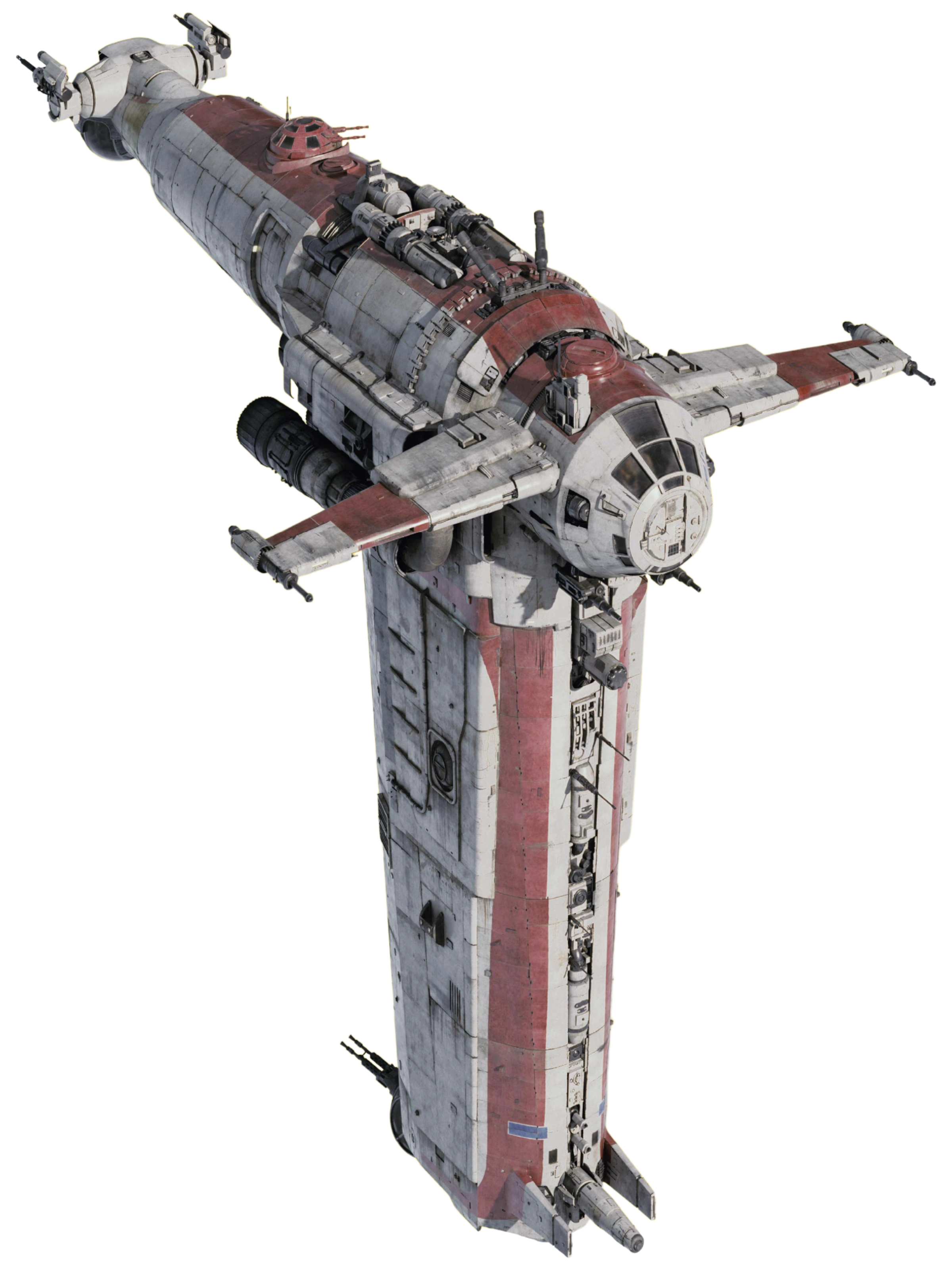
Image result for SF-17 star fortressOkay, I get that George Lucas loved WWII war movies, and I get that his dog fights were largely scripted off of those films. That being said, I felt like the bombers here were *too* 1940s, and the staging was *too* "this isn't in space". The writers here should seriously have rethought that scene. I mean, I get where the scene is going, and I understand, but I feel like we could have accomplished the same thing without completely taking away the fact we *are* in space for this battle, which is what the bomb run scene does if you think about it.
That was over six months ago now, and still that one scene bothers me, not only in that I felt like it didn't work, but that I have a huge problem wrapping my mind around why it didn't work for me.

In the mean time, TLJ had been taken apart and put back together a hundred times over as fans, commentators, academics, and reporters argue the thematic, dramatic, social, political, cinematographic and writing merits of both this film on its own merits, and those same concepts as part of the movie continuity. Its not secret I actually enjoy listen to some of the more critical reviews, and I admit it feels good to know that I'm not the only one who feels like these movies let him down.

But still, why did this scene sit so badly with me?

I think it took me most of these last six months to fully process this scene and understand why I don't like it, and in the end, the reasons themselves are about as complex as the movie should have been, but wasn't (but that's another story).

First, lets talk about the vehicle itself. The bomber (fleshed out as a MG-100 StarFortress SF-17 online) is shown as a lumbering, heavy craft built like a super heavy snub fighter rather than a star ship. It uses turreted guns to protect most, but not all angles of attack on the craft, and while I (as a Star Wars fan) can assume it had some measure of shields, none were shown or mentioned in the film. The two most striking characteristics of the vehicle while it was on screen was its slow speed, and its heavy payload.

The influences for this, as I mentioned originally, are clearly 1940s' heavy bombers. Even the name, "SF-17 Star Fortress" is an overt nod to the American B-17 Flying Fortress. Movies such as "12 O'clock High" and "The Memphis Bell" all clearly spell out the physics and challenges of an American high altitude bombing mission over a heavily defended, enemy occupied Europe.


The B-17 bristled with fifty caliber heavy machine guns, and later models had three electrically operated turrets, and up to six hand operated mounts across its length.


Historically, the favored anti-fighter tactical for American pilots, especially in the early parts of the war, was to mass together in tight "boxcar' formations, allowing ten, twenty, or even thirty machine guns to be brought to bare on a single incoming fighter. During the war German pilots were said to write back to their loved ones that flying into was like 'making love to a burning porcupine'.


The boxcar formation was also something else that was given a nod in the film with the single line "Bombers, keep that tight formation".

Honestly, this comparison doesn't diminish the scene at all for me. The reality of the first film is that the famous trench run itself is based on the British film the Dam Busters (1955), which itself is based on the British low-altitude bombing mission to destroy 4 damns in the Ruhr river valley. Lucas himself used, (and some would say ripped off) many of the script and camera elements of the film to help make the climactic assault on the Death Star the stuff of movie legends. Also, many of the camera angles used in the overall during star fighter combat in the original trilogy were reminiscent of previous movies depicting famous air battles like the Battle of Britain, and the 1940's air war over the Pacific. As a cinematographic convention, Lucas made it work with his narrative style and high production valuers.

The other bit of history that is reflected well here, even though I didn't like it, was how effective the boxcar tactics weren't in practice. American losses over German, both to flack, and enemy fighters were deviating throughout the early parts of the war.

The turning point in the air war was the US Army Air Force's decision to begin pushing for long range fighters that could  escort the bombers all the way to their targets.  P-38 Lightnings fitted with drop tanks were among the first fighters to deployed this way, and then the much heavier, but more durable P-47 Thunderbolt. The final stage in this was the deployment of the P-51 Mustang, which could famously follow American bomber formations for over twelve hundred miles, form London all the way to Berlin and back, engaging German fighters out, away from the bombers the whole way in.

Both of these reality inspired points are conveyed well in the movie's four minute long scene. After Poe Dameron's impromptu 'wild weasle' attack, the resistance star fighters cut into the First Order fighters, but even the escorts are overwhelmed and are able to mob the eight bombers with devastating effects. Some bobmers are lost to enemy fire, others suffer the other consequences of tight formation flying in combat.

And so, here we are, a desperate, last minute attack with slow moving, heavily armed bombers against a massive vessel armed with some of the most powerful cannons ever deployed. A fight for the very existence of the resistance itself, and against a determined and capable foe.

This should be the stuff of legends, a scene easily on par with the trench run, or at least a worthy successor to it.

What went wrong?

  1. Timing. The trench run of the final film was the final act, and lasted just under fifteen minutes. This let the movie tell a very tight, but solid story, showing us the dynamics of the different craft involved, the pilots, the mission, and the enemy. We have dialogue, perspective, several different musical scores, and even critical changes in pacing and strategy.  None of that is present here, however. The whole scene last less than four minutes, and about half of that does not actually show the bomber crews. There is perhaps twenty lines of dialogue in the whole scene, and most of that is from the fighter pilots, or the main characters. We have no dynamics, no chemistry, and no real time for emotions other than the perhaps excitement or urgency. 
  2. Pacing. The problem with the timing is that some of the scene work against the four minute length. From a story telling standpoint, while I know the scene has to happen fast, the physical pacing of the actual characters themselves clashes with the scene's breakneck pace. Crews flying into the teeth of a monster that is about to eat them whole are walking, not running, to and from their posts. A gunner quickly, but smoothly climbs out of her turret, while the cuts around the scene suggest she should be doing a mad scramble. We see dramatic pauses that feel too, too long in between seconds long clips of bombers being cut to ribbons. I get where the director was coming from, this is actually how a crew of professionals should act in a combat situation, but framing those actions, which are cold, methodical, and deliberate, in the middle of seconds long cuts of actions around them either undercuts the action, or makes the crew look too slow for their own good. If you're going to show the quiet professionals, you need to give the scene the space it needs to give their actions proper perspective. 
  3. Strategy. As much as I tried, I truly did, not to overthink this scene, so much of it clashes with the very nature of the rebellions that preceded the resistance. The rebels built their tactics around small, fast, survivable fighters capable of pinpoint precise attacks on under defended enemy positions. Craft like the X-Wing, and the Y-Wing, which took on the Death Star, and later the B-Wing and A-Wing were all built around the common theme of nimble, accurate, and durable craft with one pilot and able to hit quickly and get out. In many respects, these craft, as a concept. served as the science fiction extension of a knight's horse, carrying the hero off into battle. But the very presence of bombers, let alone something that channels a B-17 Flying fortress, invokes the ideas of great nations clashing across continents, with massive military industrial complexes feeding the engine of war. A "bomber" is a strategic weapon, a tool to be used by a conventional military, not something that fits into the mindset or metric of a 'resistance'. And even going past the thematic issues here, the actual act of ordering a lumbering, heavy, slow craft into what they had to know would become a hornets nest of enemy fighters was foolish at best, and idiotic at worst. Its not that the attack wasn't called for, in fact I think it was, but that was exactly the type that the rebellion of old would have reflexively send in a swarm of star fighters to do. Yes, it worked, but only barely, and a pilot as skilled as Poe clearly is has to know that the life expediency of those craft is measured in seconds.
  4. Value. What does this do to further the story? The fact of the matter is that it does a lot, but none of it is 'good' from the heroes' perspective. The order to send in the bombers was cited by Leia as insubordination on the part of Poe, resulting in his demotion and creating a conflict between him and Leia, and later him and General Holdo. Never mind that we never see Leia try and order the bombers back directly, or the fact that those same bomber crews, and the star fighters that escorted them in sided with Poe and not Leia. Its also important to note that the attack on the dreadnought's turrets, and the order to send the bombers in amounts to three quarters of Poe Dameron's character development for the first half of the movie, the remainder of his time before the final act is an ongoing head butting competition between himself and Holdo, and I have to say that the writing there does not carry the gravitas needed to do justice to the depicted losses of the opening battle. 
So, in the end, we have a four minute long blood bath that really only serves to set up internal conflict within the resistance, including watching one of their best pilots get ineffectively scapegoated for what really was a mass mutiny in military terms.

Yes, I know Rose's sister was onboard the last bomber, but really so what? Other than being her sister, what does the character do for the story, and what did Rose do in the narrative that made that loss significant. I liked the character of Rose a lot, actually, and I felt she added a good 'everyman' character to the story. Still, the loss of her sister was never given the emotional weight in Roses story that its screen time suggested it should get.

In the end, at least for me, Star Wars was about good verses evil, with clean cut, uncomplicated narratives and compelling action sequences with strong characters. The bomber scene, for me, failed on all of these points, quickly becoming too complicated for its own good,  to short to be effective, and to vague in its relivance to interest the Star Wars fan in me. 

May the Force Be with you.

Sunday, September 24, 2017

Wonder Woman (2017 movie review)

So, I finally sat down last night with my wife and watched Wonder Woman (2017).

So, from a "I came here to enjoy a movie" perspective, I'll say it was a good film, with superb visuals and better than average acting and fight choreography.  An honest hat tip is offered to both Chris Pine and Gal Gadot for delivering solid, and honest performances in a genre film (Comic book) that is often rightfully criticized for stilted or forced dialogue.

There were a lot of things that I really did like about the film, and with a "top-down" approach, I'd like to highlight them for a few minutes.

[Unapologetic Spoiler warning]

First of all, honest congratulations are deserved by Gal Gadot, and the mostly female leadership and direction of the film. Director Patty Jenkins did a phenomenal job with the story, the visuals, the acting and the pacing. Given Hollywood's strong tendency to exploit women at near every turn they could, I found the balance of action, dialogue, visuals, humour and commentary more or less spot on. The action sequences especially were a worthy addition to the high-end comic books adaptations coming across the screen lately, and I'm glad for them in this film. I don't think there was any real attempt made to hide the visual beauty of Gadot's character, or any of the Amazons, but at the same time, the camera studiously does *not* offer any lingering shots of cleavage, legs or anything else. The very 1950s idea of truly captivating eyes, a warm smile, and strength of personality really are the centre point of the film's sex appeal, and I, for one and glad of it.

I have to also call out Gadot's performance specifically on a number of levels. This depiction of Diana, Princess of the Amazons (a.k.a Diana Prince) as a unique mix of child, warrior, girl, and royalty is actually done well. All in the same moment, you can't ignore or help but love the fact that Diana is naive but strong, loyal and honest, passionate, but also inexperienced. The combination is a perfect recipe for a train wreck of bad scenes and stilted dialogue, but Gadot pulls it off with style and finesse. Also, an honest compliment needs to be made to her for really capturing how attractive Diana is supposed to be while not playing to the normal tropes of low necklines and short skirts. Just about the only time you see the titular character's upper legs is when she's kicking bad guys across the screen. All of the film's romance and intimacy truly concentrates on her face and eyes, which she works to wonderful effect.

In the rest of the movie, there are some outstandingly good points.

The scene on the docks where Steve and Diana are moving get a ride across the channel was a wonderful bit of backdrop work as we see British soldiers from across the globe in their various uniforms. I honestly wish that had done just a little more with this.

The debarkation of wounded in the same scene was a little forced for me, but I did like the effect, the reminder that all of these men going forward are taking the place of men dying and being maimed.

I wasn't really sure if I liked the scene where Diana, Steve and their party of soldiers are walking up to the trenches and seeing the wounded and scared soldiers and civilians. There is no denying the chaos of war, and the scenes of battle and it aftermatch frankly can't be horrific enough for me to make the point of how terrible this conflict was.

The Aries plot twist actually caught me by surprise. I was pleasantly impressed by that part fo the climactic fight.


But all of this is not to say that the film is without flaws. Actually, I'm going to call out a bunch, because there are a lot to talk about.

First of all, while the filming and direction are good, I have to criticize the writing. Some of the lines were just too awkward, some of the scenes seemed to leave important concepts hanging, and some of the plot points were just a little too contrived. The introduction, which looks like it could have been a comic book or a fantasy novel, was well done, but if you think about it, there were some questions that it would have been nice to have answered before going into the film's first act.

Many of the plot points in the film were left half finished, some are small, some are not so small.

When we first meat Chris pine character, he's flying a stolen German monoplane, 1917 vintage. Now, if you think about that, this cloth and plywood construct would have a range of barely a few hundred miles, one way. And, the character says he stole it from a German airfield in the Ottoman Empire (modern-day Turkey, presumably). Now math that out, and the only body of water that he could ever hope to find would be the Red sea (maybe) and the Mediterranean. Assuming the later, carry that thought to the next point.

The German warship and its crew find him by sailing/rowing through the magic barrier that hides Themescara, Diana's island home. Now, think this through. There is a magical island in one of the most heavily travelled bodies of saltwater in the world that thus far has not been randomly run into by a merchant freighter, patrol boat, yacht, or submarine? I felt like the writers either didn't think that through, or left out some plot tidbit that would have at least acknowledged the question.

The other end of that that I had a problem with was that the fact that its more or less strongly implied that the two protagonists sailed for about two days to get to London. A little map work will tell you that if you take an extremely liberal guess of how far that German monoplane could have made it, and then take the rest of the distance over water to get to London, its well over 3200 miles. To do that in three days would be road trip speeds of 40 miles per hour or more, not sailing ship speeds (which seldom break single digits.

Again, the idea of Themscara is good, and the idea of an American spy in a stolen German plane finding it works as a plot point, but I really, really felt like the writers either didn't think this through, which is insulting, or did think it through and didn't share any of the basics with us, which is also insulting.

Time also worked against the film in my opinion. So much of the awkward, "fish out of water" scenes where Diana is confronted with 1917's Europe felt forced because when I stopped to think about it, my honest first throughs were "wouldn't they have talked about at least some of this when they were stuck together in that boat?" I don't mean to say how the writers should or shouldn't do their jobs, and I know it sounds like that, but when I think about it for more than a minute, many of the jokes and scenes make little to no sense when you consider that Diana and Steve have probably been within a few feet of each other for close to two weeks at some points.

Anyway, moving on.

Whatever happened to the German warship that was chasing Steve at the beginning anyway? that's a crew of several hundred men, and we know the ship came through the protective barrier, we saw it in the background. Whatever happened to it? Why didn't it send another party ashore, or why did it lave if it did?

Whatever became of the Scottish sniper who locked up in battle? We know he lived, but did he ever regain his courage?

What about the actor turned forger/guide? Did he find a theatre that would accept him despite his skin being "the wrong color"?

What about the native American profiteer/smuggler? What the heck ever became of him after the war?

What was the fate of Doctor Poison?

These were developed points, things that were said or shown on the screen, questions that were asked aloud, and never answered.

I really fell like writing like that is either sloppy or lazy.

one thing that actually ruined an aforementioned scene, while Diana and Steve and their band of heroes is making their way to the front, we see wounded soldiers and civilians fleeing in the other direction, some in a total panic. But, a few minutes later, we hear Steve clearly tell Diana that the battalion of men assigned there had been there for about a year and had not gained "an inch". More to the point, they are hunkered down and well covered in what is clearly a well used, well-placed trench. If the Germans had actually overrun "just" overrun that town, the casualties would probably have been in the hundreds, the trench would have been covered in men probably still covered in smoke and dirt from recent fighting, and there would have been no talk of "not an inch" after having just lost a whole town. As beautifully done, and powerful as the whole scene is, it just begs you not to think about it too hard.

And, closing out with my normal criticism, the films technical accuracy shifted between 'eh' to appalling.

The normal, and predictable liberties are taken with aircraft, bombs, equipment, and weapons, its annoying, and irksome for me, but not anything I'm not used to.

As visually flashy as the fight across no-man's land was, scrutiny of it really shows that it is all style and no substance. First of all, the scene where Diana is being pummeled by German machinegun rounds, which are bouncing off of her shield: I'm left asking "why didn't anyone aim for her legs?"

Seriously.

Second of all, her cohorts in this are able to run up to her under the explanation of "she's taking all the fire". The problem there, I really, really find it hard to believe that 100 or more battle-hardened German infantry are suddenly going to be so mesmerized by one brightly clad woman charing them that they would totally miss a cluster of four men running across no-man's land. Our heroes would have been under fire seconds after leaving the trench, just like Dianan was.

Also, I doubt that the Germans were only fielding one machine gun, and I'm left to wonder what everyone else on the line was doing. Not only were they not shooting at Steve and the others, they weren't shooting at Diana since the cone of fire coming at her was really, really narrow (IE, almost head-on only). That close to the line, she should have.would have been taking fire from both sides and the front, just to be technical about it.

As a counterpoint, I found the part with the armoured car actually well done. Typical comic book flash and of course a total fantasy, but if I had to speculate what such a fight would look like, that's it, more or less.

Another thing that left me scratching my head, Diana's entrance into the German Gala. Even if we assume, somehow, that no one there would recognise that the 24" handle running down her back was a sword hilt, did no one (not even the guards)  stop to wonder what the heck it was?

Again, as poetic and beautiful as the climactic death of Steve is, the plot whole it left was big enough to drive a truck through. If one blindly fired gunshot was enough to ignite the whole plane and consume all the poison gas aboard (which by the way makes no sense from an ordinance standpoint), then why not use a rifle to ignite it on the tarmac? Why not try hitting it with a mortar, or throwing a grenade in the cable and jumping out with the pilot's parachute.

Oh, by the way, the pilot's chute is a total anachronism, fixed-wing aircrews didn't have parachutes until well after the end of world war one.


I could go on, but to be fair, no part of this movie was meant to technical accuracy, which is why I'm more or less forgiving them for using at least 2 British Mark 1 tanks as major props on the German airfield. Sure, maybe they were captured examples and being used for research, [shug] I don't know.


I know it sounds like I am bashing the movie, and I am.

But not for the reasons you may think.

I am honestly thrilled that screen personalities like Gal Gadot can join the ranks of Kerry Fisher and Sigourney Weaver as powerful examples of what women can do in an action environment. I'm thrilled that this movie had the women in place to make female-centric decisions about hot to depict a female character. These are things I wholeheartedly support.

I'm also honestly thrilled that we are able to really show an honest if somewhat impulsive romantic relationship where the more intimate shots are of the face and its expressions. I doubt we'll ever see the end of "T&A" sex scenes, but when a powerhouse franchise like DC is able to show romance and physical attraction without even taking her shirt off, we have honest to God character building going on, and I love it.

But in the end, the very powerful, very emotional, very human story of a young warrior seeing the horrors of combat for the first time and facing them with superhuman strength and human courage is drastically undercut by writers and a director who failed to see things through. I am disappointed that the film didn't back up its core acting power with better writing and better supporting storytelling that it did.  I hope that future films in this franchise build on what they have, and fix what they screwed up, but I'm hoping to see more of Gal Gadot's Wonder Woman in the future.

7 out of 10, with Gal Gadot getting a 9/10 for her work here.

Wednesday, November 2, 2016

VLOG Ep 1 "Where are you in your story?"

Let me introduce you to a rather well known modern literary character who is, by far and wide, one of the more beloved of his genre.

Now a father and husband, his career is both scandalous and prestigious. For you see, looking back, the man is a war hero, a solider, a commissioned officer and a one of the most influential counselors in a post-war government that he helped pave the way for. During a brutal war that started off as a desperate insurgency, his knowledge of the black market and its interconnected smuggling routes was put to good use moving and supplying men and women who were both fighting and dying against a brutally oppressive regime. While none in retrospect would doubt his credentials as a hero, even his own wife jokingly referred to him as a scoundrel a few times; a poetic reference to his time before their first, dramatic meeting.

But, for all of this flowery language and nod-and-wink referencing, the fact of the matter is that our hero had a truly dark background. A military officer, he deserted the Navy, and went into business for himself as an errand boy and freighter captain. When legitimate business didn’t pay enough, he went into smuggling and eventually filled his contracts with links to organized crime, including narcotics smuggling for several powerful and ruthless crime bosses. The characteristic pistol he kept at his side was hardly a decoration, and our yet to be named hero had seen more than his share of gunfights with little more than selfish motivation behind each pull of the trigger.

The turning point for our hero is a story worthy of legend itself, and this arguable highpoint is a literary narrative that has now spanned two generations and hundreds of languages. Pulled into a smuggling run with the promise of money and nothing more, our hero is offered a chance to turn his life around and become the leader he knows he can be. But instead, he grabs his reward and runs, seeking comfort in wealth, safety on solitude. It is only at this point, safe and removed from danger, that the weight of his decisions come to him, and rather than continue on the way he has, he turns and races back, arriving just in time to help turn the tide in a desperate last ditch battle.

For those of you why may be of a certain age, or those of you have parents who meet that criteria, you probably already know who I am talking about.

But for the rest of you, I, of course, am describing none other than the heroic scoundrel from a galaxy far, far away, Han Solo. An almost accidental creation on the part of George Lucas, Han’s character is so convoluted and over the top in many ways that even the actor who brought him to the screen didn’t care for him. Harrison Ford had repeatedly said that he was least impressed with this creation of Lucas’, and had little desire to revisit the character after the close of 1983’s “Return of the Jedi.” Ultimately, it took the literary power of authors like Timothy Zahn, Brian Daley, and Ann C. Crispin to give the character the emotional weight needed to earn him his rightful place in the hearts and minds of loyal Star Wars fans across three decades of readership.

But how did these master wordsmiths expand on our intergalactic cowboy? They did it by painting the picture of a boy, and then a man, pushed to selfish motives, with sketchy manners, and nothing but contempt for the law. They painted a person who deep down was honorable, but on the surface was nothing more than a criminal, and played the part with no break between acts.

It is only with the retrospect of that climactic scene in “Star Wars: A New Hope,” where Han Solo blazes in at the absolute last moment to clear the way for Luke Skywalker to destroy the Death Star, that we as an audience can allow ourselves to truly enjoy the stories of an unpleasant young criminal named Han. Only with knowing what he will eventually become, can we be allowed to enjoy the stories of his seedy and dishonest beginnings, cherishing every glimmer we see of the seldom seen hero that we know is buried within.

And while Han Solo is perhaps the most popular literary figure to wear the title of redeemed rogue, he is not the first.

The legend of Aladdin starts with a thief.

Sinbad was a pirate.

Jumping forward, even Disney’s Flynn Ryder from the 2010 movie Tangled has a backstory that could best be described as a cardboard cutout template for “Movie Bad Guy.”

We love these characters, all of them, because the power of the literary narrative lets us specifically see their acts and the motives in the same instant. We are welcomed into their hearts and minds selectively in a specific effort to tell a powerful narrative meant to engage the audience at an emotional level.

So, let me ask you this. What would you have said if you had first met our unscrupulous Han Solo a month before his faithful encounter at the Mos Eisley Cantina? How much adoration and respect would you have shown an underworld smuggler who’s idea of settling an argument was to blast his opponents before they could blast him. How much leeway would you have given him after seeing him shake hands and make deals with the Hutts, who themselves were slavers, murders, drug dealers, and the overall incarnation of the word “criminal.” What would you have said if you had not been able to see the hidden pain or longing behind Han’s eyes as he made his choices?
How long would you have sat there and talked with this common thief?

How long would you want to sit and talk with Sinbad, a pirate whose goal every morning was to rob and pillage?

How long would Flynn’s charisma had been able to mask his selfish and lazy lifestyle?

These people, and a great many more in Literature, cinema, religion, and even history, are seen today as heroic, and in many cases as redeemed rogues due to the retrospect of their story. That is to say that we can look at them in seconds and understand that their faults at one time were not the sum total of their character. And that even in their darkest moments, they were able, and they chose to make a change.

But this, here, is not literature, or scripture, or even a history textbook. This, here and now, is the naked, precise, imperfect reality that we live in today. We are gifted with hindsight that is not only 20/20, but the modern internet affords us information at levels and speeds our ancestors could never have dreamed of. On the past and present, none before us were ever so well informed.

However, we lack the perspective of knowing what change can and will happen going forward.

So, while we embrace the literary redeemed rogue, we are forced into the imperfect decision making process that is real life. We must evaluate people in the here and now, with only our best judgment and our perceptions, imperfect as they may be, to say what they are, and what they may become.

But perhaps most depressing of all, is that we must look at ourselves in the mirror with much the same blindness. We see only our current actions, and for many of us, we see only the crushing weight of our mistakes. Due to a cruel twist of fate, many of us are chemically predisposed to remember our faults, our wrongs, our shortcomings first and foremost when we look in the mirror.

Now, I want you to listen to me very carefully for this next part. I want you to think on this for a second.

In order to be a redeemed rogue, you much first be a rogue.

Let that sink in. I seriously want you to think about it because I have another thought for you.

Where are you in your story?

And that person you don’t like, that bully from school, that liar from work, that gossip from church…
That reflection in the mirror.

Is it possible, maybe, somehow, that they are someone trying to change, or someone who will try and change in the future?

Where are they in their story?

Where are you in yours?

Monday, October 31, 2016

Video Blog Test Episode 0.1

So, I ran my first Video life stream tonight. What started off as a hardware test turned into an impromptu show.

The show: Video (Facebook)

My reading for this episode: "Out of Nowhere"


Cisco Cividanes

Monday, October 5, 2015

KSP: Keystone Crew Delivery Vehicle.

So, as much as I like to cobble and tinker with Kerbal Space Program, there is a method to my madness as I juggle parts around. One of the things that I like about the program is that it lets you address the same type of issues that the National Aeronautics and Space Administration, the Russian Federal Space Agency, and the Chinese National Space Agency have to deal with each day. While the US arguably has the most advanced space program currently going, I am much more drawn towards the Soviet/Russian Soyuz program and its overall engineering philosophy. I am also a longtime fan of the KSP mod Home Grown Rockets. I have flown a great many missions with the Kerbal "Soy Juice" command capsules fitted with "onion" pods, and have built several large and complex space stations around the craft's abilities.

Something to note, the Soyuez works on a very dependable, but disposable working principle. When launched, the craft itself is composed of three parts, the "Orbiter Module", the "Reentry Capsule" and the "Service Module". of the three components, only the Reentry calsuel comes back to earth, and even that is a rough entry. The whole craft is a one-time use, and can carry only three people.

If you're interested in some more details on the craft and it's functions, I highly recommend the ESA's videos on the Soyuz Launch, Docking, and recovery.

In the late 80s, and through the first decade of this century, the RFSA was heavily invested in research into a replacement for the Soyuz craft, with a heavy emphasis on reusability, as well as a less violent reentry back to earth. One of the more prominent designs to come out of the project was the Kliper. Using lessons learned from both Soviet/Russian space experience, and a new partnership with the European Space Agency, the Kliper was seen as a larger, more effective means to move men and equipment into orbit around the space station, and also take on additional missions like satellite position, orbital repairs, and other scientific research.Funding, however, was the undoing of the design, and the ship is still stuck in the design phase with no funding for advanced development.

I was drawn to the kliper design because it uses a classic rocket to reach orbit, but also uses airfoil/glider design to return to each in a much more complete way than any of the Russian predecessors. Also, by using a glider, rather than a bell (the shape of the reentry module on the Soyuez), the return is actually far less traumatic and more controlled.

Early Kliper concepts made the craft out to be a super compact space shuttle, complete with landing gear. Later designs, however, incorporated lessons learned from Russian experience in hard landings (Landings on ground, rather than water) and created a much lighter craft that could glide to a safe speed, and then deploy a large parachute for the final stage of the decent.

Again, the major design point here is the complete reusability of the entire craft. Rather than having to rebuild a completely new vessel  each time, the kliper can be inspected, refueled, and set atop a new rocket. The advanced computers, avionics, radars and instruments are preserved for another mission.

I have dabbled in a fully functional, rocket launched space-plane before, but never liked the results. The parts available in KSP were just limiting enough that I wasn't able to build something that both worked and didn't look unbelievably ridiculous.

My most recent project, however, took some of my lessons learned, and a new take on design philosophy,

My goal, I reminded myself, was not to build a passenger-capable version of the X-15, and while the klipper was not actually within my grasps, a controlled reentry and parachute landing by a lifting body craft was. At the end of the day, I wanted something that could carry at least 3 crew, reach orbit, and return with most (or all) of the instrumentation, control systems, and air-frame intact.

There really wasn't any debate on what from factor to start with. The Mk 3  (space shuttle) set was too large. If I went that route, I'd be looking at rebuilding a full shuttle, which is what I specifically didn't want to do. Alternately, the Mk 1 command pod was too small (crew of 1) and had no lifting body abilities. In point of fact, the Mk 1 would be a step backwards in every sense of the word. So, that left us with the Mk 2 series of parts.

The Keystone CDV (Crew Delivery Vehicle)


I drew my name from the Soyuz, which is Russian for "union". "keystone seemed to work for what I was looking for.


Vessel information
Weight: 8.0 T
Length (nose to docking ring): 7.4m
Width: 2.7m
Delta V: 919 (atmo) / 1160 (Vac)
Crew: 0 (Drone control unit)
Passengers: 4
Engines:
4x 24-77 "Twitch" Liquid Fuel Engine

The Keystone is capable of transferring 4 passengers into high Kerbin orbit, but does not have the thrust (by itself) to transit outside of orbit and move to another body (Mun or Luna, for example). Its primary mission is the reployment and return of crews to other orbital facilities, or waiting orbital craft deployed in unmanned launches.


The walk-around:
As you can see in the nose detail, the ship uses multiple Place-Anywhere 7 Linear RCS Port thrusters for orbital maneuvering.

I'm using a Mk 16-XL parachute for the nosecone and final recovery system, and the front quarter of the craft is the fuel tank, one of the MK2-to-1.25M Adapter tanks, And that mounts to a MK2 drone core control unit. 


The Mk2 Cargo Bay (CRG-04) is actually serving as a support bay/module for this vehicle. It does not have cargo carrying capabilities.
The bay contains, and Advanced Inline StabilizerFL-R25 RCS Fuel TankZ-1k_Rechargeable_Battery_Bank, and 5 x OX-STAT Photovoltaic Panels. Communications are handled by a single Communotron 16 mounted on a Cubic Octagonal Strut, whcih is attached by the center of the Z-1K. Thefuel for the main engines is conveyed by two FTX-2 External Fuel Ducts.

The rear aspect of the Keystone shows a good perspective of the crew compartment, the docking rink, and the flight controls surfaces, as well as the 4 engines. 

The 4 passengers are carried in a Mk2 Crew Cabin, as I said before. Maneuvering and attitude control is handled by a combination of the Reaction wheel, the RCS system, and the four A.I.R.B.R.A.K.E.S.


The Docking port is projected out past the ends of the A.I.R.B.R.A.K.E.S. by an (emptyFL-T100_Fuel_Tank that is used here for a structural tunnel and mount for the 4 main engines. During initial trials, I mounted the docking port to the back end of the hull directly, and the engines to  Cubic Octagonal Struts, but it was quickly realized that during landing, the engines were being destroyed by the otherwise slow impact, the docking port was rated for that type of impact so I let it be the "bumper" for the ship on landing.


This slightly enlarged image gives you a good view of all the critical systems with the control flaps extended into full break mode.


Craft file: Note, this includes the 3 stage launch vehicle. The launch system is a stock reproduction (in concept) of the Soyuz rocket.

Monday, June 29, 2015

Politically what I am *not*

I don't know when this happened, and frankly I don't care.

A long time ago, being "a republican" meant taking ownership of your own deeds first, encouraging economic growth, protecting the right of the individual. It meant a strong, and at times aggressive foreign policy. It meant being proud of the present day America. 

But what passes for the the conservative movement today, and by extension, many of their allies, is little more than a cancerous mutation of the principles I love.

**
Being responsible for yourself has turned into a cult of "self determination" that stops *just* short of saying anything can be overcome, and by extension all failures are indications of personal weakness. We mock the idea of the government offering assistance to people in need, and we hold up the worst of the worst, a handful of self-indulgent, unrepentant frauds, and tacitly proclaim them as "typical" of all who ask for help from the government. the RNC would have you believe that most people at the warfare office are lifelong leeches, when the fact of the mater is quite different. 

**
I believe in the concept of a free market economy, and want to see individual ideas grow and prosper, but watching conservative policy on business over he past ten years alone is like watching a nightmare of blind obedience to greed. Statement after statement from local and state leadership ignore, or deny the fundamental facts that prosperous  business in today's day and age are *not* likely to spread the wealth down to their employees. In this economy, with thousands clamoring for work, there are plenty of places, and plenty of small companies who are happy to  pay you as little as they possibly can, and until someone forces their hand, they will not, and realistically can not lift the bottom line without getting slaughtered by their competition. Not all bosses are evil, but just enough of them are selfish enough to keep 'the system" from ever being "charitable" (for lack of a better word at this moment) at a large scale. The idea that 40 hours a week should give you a livable wage should be a point of conversation, not passed off to private industry as "when the economy gets better, the wages will go up".

Likewise, I fully support the right of the rich to get richer, and the right of the individual to make and keep more money. But the more I hear about how few people control the majority  of the cash flow in this country, and how little they play in taxes proportionately, I have to ask when "making money" turned into dodging out of civil duty? I pay my 25% (give or take), why in the hell am I hearing about people paying 5%, 6% or 7% and calling it a day there?

And likewise, in today's environment, money hold a direction correlation with power and influence, and political circles on both sides of the aisle are rife with stories of local and state elections where everyone agrees that someone 'outspent' someone else to get "the word" out.

And just in case anyone wanted some names, start with "the Koch" family, and work out from there.

I don't resent or want to limit the freedom to make money, we are not socialists. But money also carries with it power, and some in power are using their money to limit other's freedom. I'm not saying I have all the answers.... but the dialogue thus far has been shouted down with "they must hate the rich" and "he wants all of your money" whenever the issue is raised.

**
I support research and scientific development, and when the data doesn't tell such a rosy story, skepticism is appropriate; rigor is part of "the process". But the republican pundits today have made character attacks and bad math their M.O. when talk turns to issues like climate change, environmental conservation and human impact. Personally, I'm convinced that we are hurting the environment, and that our work is changing the overall environment of the planet, but yes or no... when a scientific paper comes out saying that, the responses from the right seldom contain good science... but rather bad one-off examples, accusations of ulterior motives, and cries of "tree huggers". I don't mind a good argument, I don't even mind losing said argument. But why do we insult the process of discovery by STARTING the conversation with "I don't agree with them, so how can I prove they are wrong?"

**
I have always understood the reluctance to embrace alternate lifestyles and religions, its human nature when addressing things that are new. But today, non-traditional religions and same sex marriage are *not* new, they are not misunderstood, and they are not scary or dangerous. What remains of the opposition to them falls into two categories, the bigots, and the legalistic.

To the first, who in the hell are you to tell adults who they can or can't live with? Who in the hell are you to say what faith can or can't have a sign or a cross or a marker? Who in the hell are we to say "but it's offensive"? The Republic party is lined with bigots. not all of them, and I can't even say its a majority, but with election races running tight every year, the party knows how to get votes, many by appealing to bigots and repressives... they then have to keep that party line going if they want to compete in the elections. They've tolerated the ultraconservative old guard and their ways so long that some of the poisonous "you are not like us so you are dangerous" mentality is making it into policy and decision making. 

To the second. I do not have any doubt that the constitution's balance between the rights of the states and the right of the individual, and the powers of the federal government is a tentative, dangerous, and dynamic balancing act that we get wrong as often as we get it right.
But we a have a whole class of people here who are told at the doors to hospitals, court houses, police stations and even funerals that their rights are not as secure or protected as others.  I have personally seen too many cases were parents, administrators, judges and law enforcement offices have stolen precious time form people who didn't have it to being with. Without proper protection, people can be undermined, challenged, and driven out of vital decision making processes in their own loves, or the lives of loved ones. Does it happen everywhere? No. Is it the majority of times, I don't know, but I will admittedly guess not.  But it's more common that it should be, more common that it needs to be. And most importantly, its nothing, NOTHING but an expression of meanness. Bullying as petty as any schoolyard thug… but done with badges, pens, or official sounding words.

Are we so desperate to protect "states rights" that we will lets states like Oklahoma (who were forced to allow marriage by a court) impose the locally popular interpretation of "right and wrong" on others? I support the right of states and their autonomy… but that doesn’t include discrimination. That doesn’t include letting the majority force themselves on a minority.

Waiting for states to 'come around' of their own accord would likely have left Jim Crow laws in place well into the 90s. Why would we think anything different about  lifestyles and how states deal with them? If anyone want's to let Oklahoma do this on their own, keep in mind that the state has voted (overwhelmingly) to legal jam Christian values down the throats of any resident living in the state. Gay marriage: "threat to our children", religious right (namely inheritances and wills by Muslim in this example): "infiltration by a foreign power"... an so on.
I'm not independent because I am no longer conservative. I'm independent because what I believe is isn't represented by the republicans in the least, and who they pander to  not only disgusting, but dangerous.


** 
I'm all for a strong international presence, I want to see an aggressive display of force, and I am not opposed to shedding blood in our national defense.

But how in the hell we wound up in two counterinsurgency operations in nations with minimal to no infrastructure to build upon, and  populations so diverse and violent within their own realm… is just beyond me. We went into Iraq on a lie. I don't even care who's lie it was, but I fell for it, I cheered them in... then we got stuck going "well now what?" Then the locals who didn't like us did exactly what was done in Vietnam... they used the home court advantage. We went to Afghanistan on a grudge match... we won the first round... but it became clear very quickly that we didn't have a second step laid out... we went in on impulse, one whole nation, madder than hell.... great... then what?

There's a line between "aggressive" and "stupid"... I would submit we were humping that line  like a horny high school senior when Bush gave the "go" order.


**
I'm all for being proud of the US. We have a lot to be proud of.

But what I see, with my own eyes from the right wing these days, is not *just* national pride, it includes  examples of a brand of ultranationalism reminiscent of tyrannies past. I've seen people want, demand, and even dictate that others: adults, teens, children, *must* be proud of this country. They insist on a pride so absolute that it needs no justification, and so fragile that it can survive no scrutiny or criticism. I've seen books, texts, papers and speeches written and improvised in all forms, defending the country like its existence were a religion, and not a nation. The concept that one can be critical of this nation and still love it is paid little more than lip service by pundits and policy makers who set the tone for the party leadership.


I still shudder at the benchmarks of the progressive movement these 8 years past. the Affordable Healthcare Act was ham-handed, and I'm already seeing some ugly repercussions from it in my own premiums. There was good to it, but I am worried that more people will suffer other ills because of it in place of, or perhaps on top of getting sick.  I'm watching a president and a party treat major shooting incidents as policy points for gun control when the issues run a lit deeper than just who had their hands on a gun.


I'm seeing *both* parties talk out their assess when it comes to human rights and civil liberties. The patriot act and the NSA's data collection just being two examples. 

No, I still don't consider myself a liberal or a progressive. And I still do consider myself a conservative.

But there is a difference between "conservative" and  "scared, ignorant, bully". I just wanted to make sure no one thought me the latter of the two.


Monday, January 19, 2015

KSP: Not exactly according to plan...

Tonight, the game plan was to launch my more developed "Individual Crewed vehicle" into orbit for sustainability trials.

The vehicle itself was actually a good conceptual representation of the Russian Soyuz capsule, and used mostly stock parts.


ICV Km 1
Crew: 1
Engine: LV-909 Liquid Fuel Engine & RCS Maneuvering Thrusters
Reentry: Command Pod Mk1 & Mk2-R Radial-Mount Parachute
Communications: Communotron 16
Fuel: FL-T100 Fuel Tank
Power:
OX-4L 1x6 Photovoltaic Panels & Z-100 Rechargeable Battery Pack


Note: the whole idea of the frame is to recreate the utility and the base concept of the Soyuz ship, and to expand on the capabilities of the Stock Mk1 capsule.

And... I wanted something that didn't look american when you looked at it. Call it a stylistic thing.


The ship isn't much heavier than the first manned pod I sent up, so the obvious first step was to build a proton launch platform and mount it there.

ICV launch 1

The Capsule may not have been much heavier, but the additional components made it large enough that we needed to use the next size up of nose fairing in order to completely house the capsule. Thrust to weight, the numbers looked good for a long, steady climb into orbit. 


Unfortunately, the drag on the nose, and the thrust of the second stage didn't add up the way I wanted to. Moments after the boosters jettison, the nose started to drop hard. a minute later, when I should have been pushing 18K meters the altitude started to drop, and before I could react I was at 12K and dropping.

I finally managed to punch the fairings and get the capsuel free of the rest of the rocket. I had just enough time to eject the chute before the altitude went from four figures to three. 
Early splashdown.... You can see the parachute just barely having time to open as the capsule tumbles to the water and the last stage boosters are just about to hit the water at heaven only knows what speed.

All told, the mission was a falure, but the pilot survived and I realized that the proton 1 is an excellent small platform, but I need something with substantially more kick to get the next generation of crews and vehicles. into orbit.